
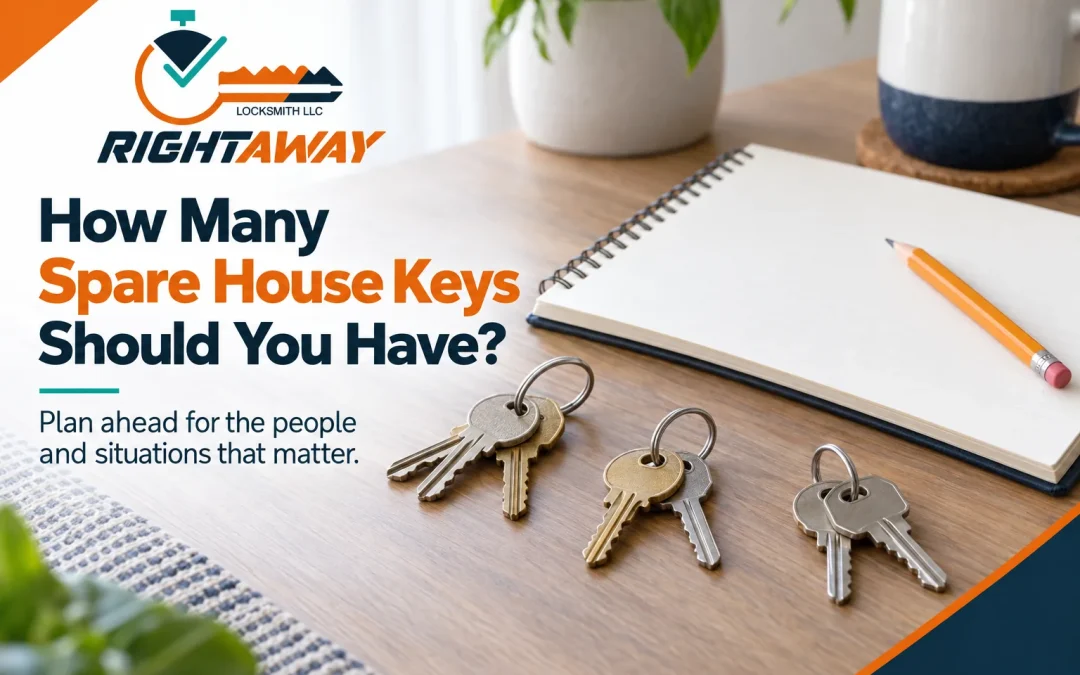
For most households, a practical plan for spare house keys is one active key for each resident who needs independent entry, plus two backups. Keep one backup secured inside and leave the other with a trusted person nearby. That's a starting plan, not a fixed rule for every home. Count existing keys before making more.
Count spare house keys by access needs
An active key is a key someone uses for daily entry. A spare is held in reserve. Keeping those roles separate helps you avoid counting a resident's only key as a backup.
For two residents who each need their own key, the starting plan gives you four keys total. If both already have working daily keys, you'd need two new copies, not four.
Add another copy only when it fills a clear need. A relative who visits while you're home doesn't need the same access as a family member who arrives alone each day.
Count each different key separately if your exterior doors use different keys. Your backup access plan needs to cover a usable entrance, but every key holder doesn't necessarily need a copy for every door. Decide which door each person will use before ordering full sets.
Check whether making more copies solves the problem
Before adding keys, consider whether you know who has the existing ones. More copies won't restore control over a key that a former resident or other person may still hold.
Rekeying changes which key operates a lock. Duplication makes another key that works like the existing key. If you're concerned about an unreturned copy, discuss rekeying before spending money on duplicates.
An archived U.S. Department of Justice crime-prevention handbook recommends rekeying when moving into a house because former residents may still have keys.
Renters should check permission first
Texas Property Code Chapter 92 generally requires landlord rekeying within seven days after tenant turnover for covered rentals. Tenants generally can't alter or rekey security devices without landlord permission, though specific statutory remedies apply. Check your lease and the Texas rules before arranging changes yourself.
Put each backup where it can help
The indoor backup serves a different purpose from the outside backup. It can replace a misplaced daily key while you're home, but it won't help you get inside when every door is locked.
Keep that indoor copy in locked storage. Choose a nearby trusted contact for the outside copy based on whether you can reach them and collect the key when needed. A person who is rarely available may not be a useful backup holder.
Don't substitute a doormat, flowerpot, or other outdoor hiding spot for a trusted holder. The City of Southport Police Department's home security checklist advises leaving spare keys with a trusted neighbor rather than in common outdoor hiding places.
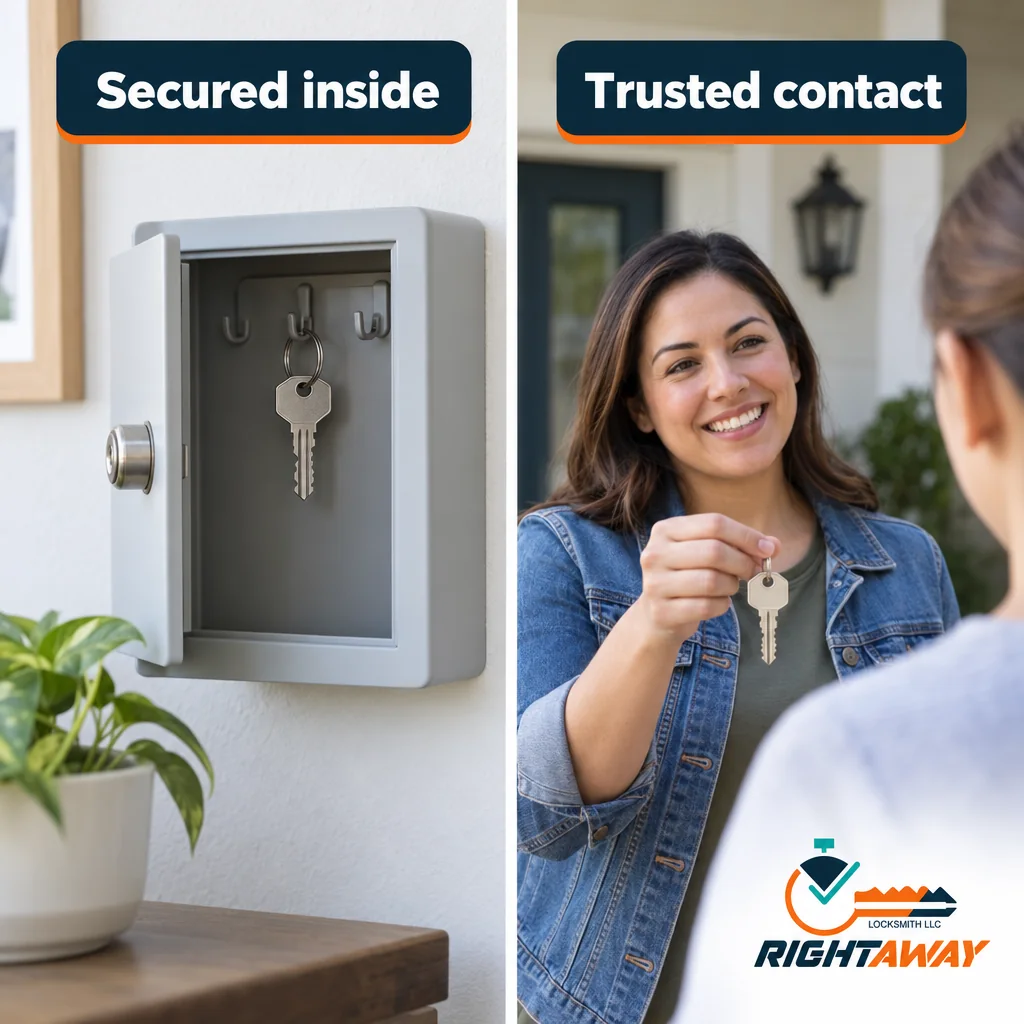
Give temporary access an end date
A short visit shouldn't create permanent access by default. For deliveries or repair work, arrange entry while a resident is present when possible instead of handing out another key.
If someone truly needs a temporary copy, decide when the access starts and ends before handing it over. A pet sitter covering a trip has a defined need. A person who might help someday doesn't yet have the same reason to hold a key.
Arrange the return as part of the original handoff. Don't treat silence after the visit as proof that the key came back. Keep temporary copies separate from your regular backup count so an issued key doesn't leave your emergency plan short.
Keep a record of every copy
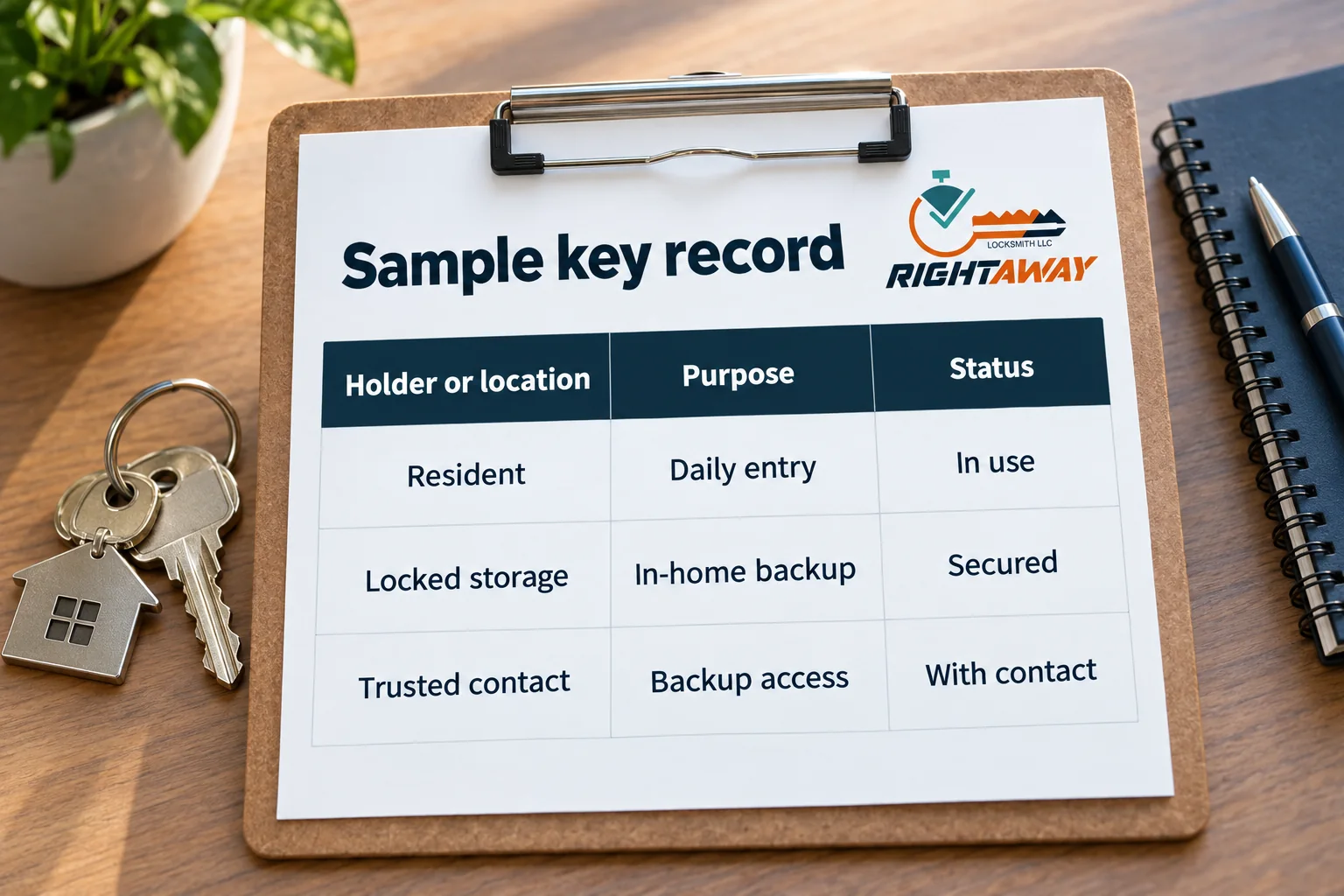
Use a private list to track the total number of keys and their holders, following the key-control guidance from eXtension. Include keys kept in storage, not just those carried by people.
For each key, record the holder or storage spot, its purpose, and its current status. Update that same record when a copy changes hands. A key marked as returned should actually be back in your possession.
Keep an unaccounted-for key on the list rather than deleting it. Otherwise, your record can look complete while a copy remains outside your control.
Prepare for key duplication in Houston
Right Away Locksmith LLC offers residential key duplication in Houston, including standard and more complex house keys. Once you've settled on the holders and checked existing copies, gather what you need for service.
-
Bring a clean, working key that's in the best condition you have.
-
Know how many additional copies you need for each different key.
-
Note any sticking, bending, visible wear, or need to wiggle the key.
If the only available key is worn or doesn't work well, have it assessed before copying it. The key or lock may need attention first. For a specialty key, let the locksmith identify what's needed rather than assuming any blank will work.
Other household key questions
Call Right Away Locksmith LLC at (832) 850-5261 for residential key duplication in Houston. Share the number of copies you need and any concerns about your existing key to discuss the next step.