

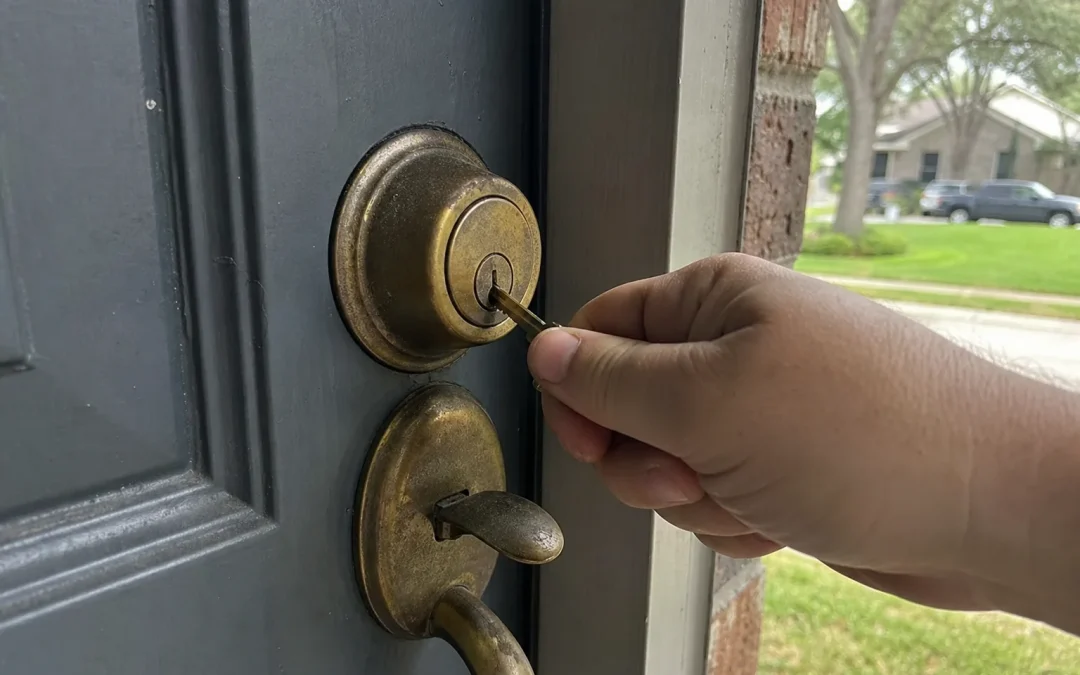
A house lock hard to turn often has a friction problem that can get worse with use. The trouble may come from the door rubbing the frame, a worn key, dirt in the key opening, or worn lock parts. Check whether the deadbolt works differently with the door open before deciding between simple care, repair, or replacement.
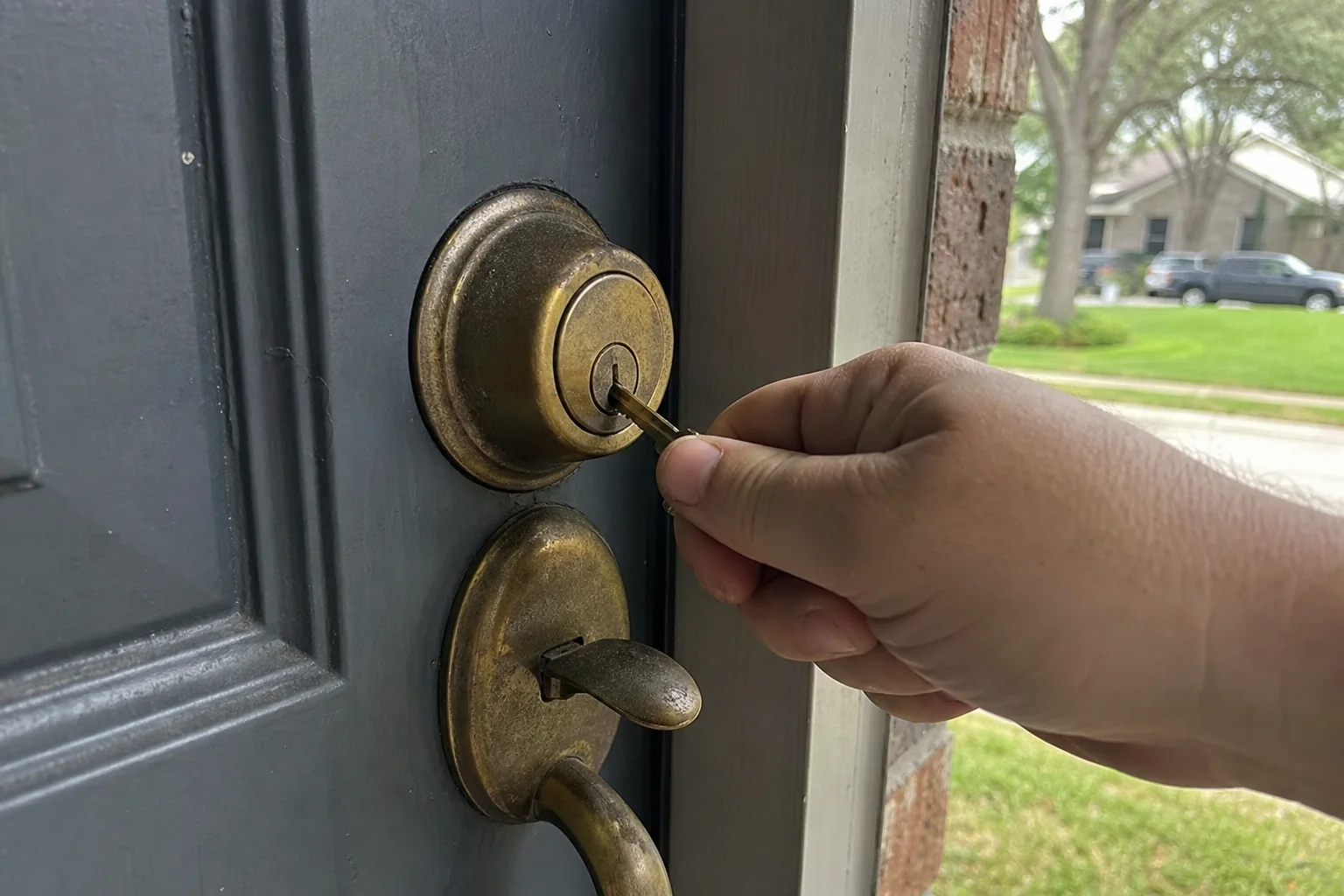
Start by checking whether the door or lock is causing the drag
The most useful first check takes less than a minute. Stand inside with the door open. Insert the key and turn the deadbolt several times. Then close the door and try again.
- If it turns easily while the door is open but binds when closed, the bolt may be rubbing the strike plate or the hole in the frame.
- If it feels rough or takes force in both positions, look at the key and the lock cylinder.
- If the key goes in poorly, stops short, or catches on the way out, debris or worn parts inside the cylinder may be involved.
- If the thumb turn sticks from inside too, the issue may not be the key alone.
Don’t force a key or deadbolt. Extra pressure can bend or break a key, damage internal parts, or leave you unable to secure the door.
Kwikset’s door-jam troubleshooting lists a misaligned latch or strike, a frame hole that is not lined up, and mounting tension as reasons a lock may jam or fail to rotate smoothly. Its practical check is useful for many deadbolts. Notice whether you must push, pull, or lift the door before the lock will turn.
Why an exterior house lock can become hard to turn in Houston
Exterior doors move. A wood door and frame can take on moisture from the air, which can change the gap around the door. Oregon State University Extension Service explains that wood exchanges moisture with surrounding air and swells when it gains moisture. That movement can make a bolt scrape the strike plate even if the lock itself still works.
Houston weather gives exterior doors plenty of moisture to deal with. The National Weather Service Houston and Galveston climate summary lists 51.84 inches as Houston’s 1991 through 2020 normal annual rainfall. A lock that becomes stiff after wet weather, then improves during drier weather, deserves an alignment check before anyone assumes the cylinder has failed.
Look for alignment clues at the strike plate
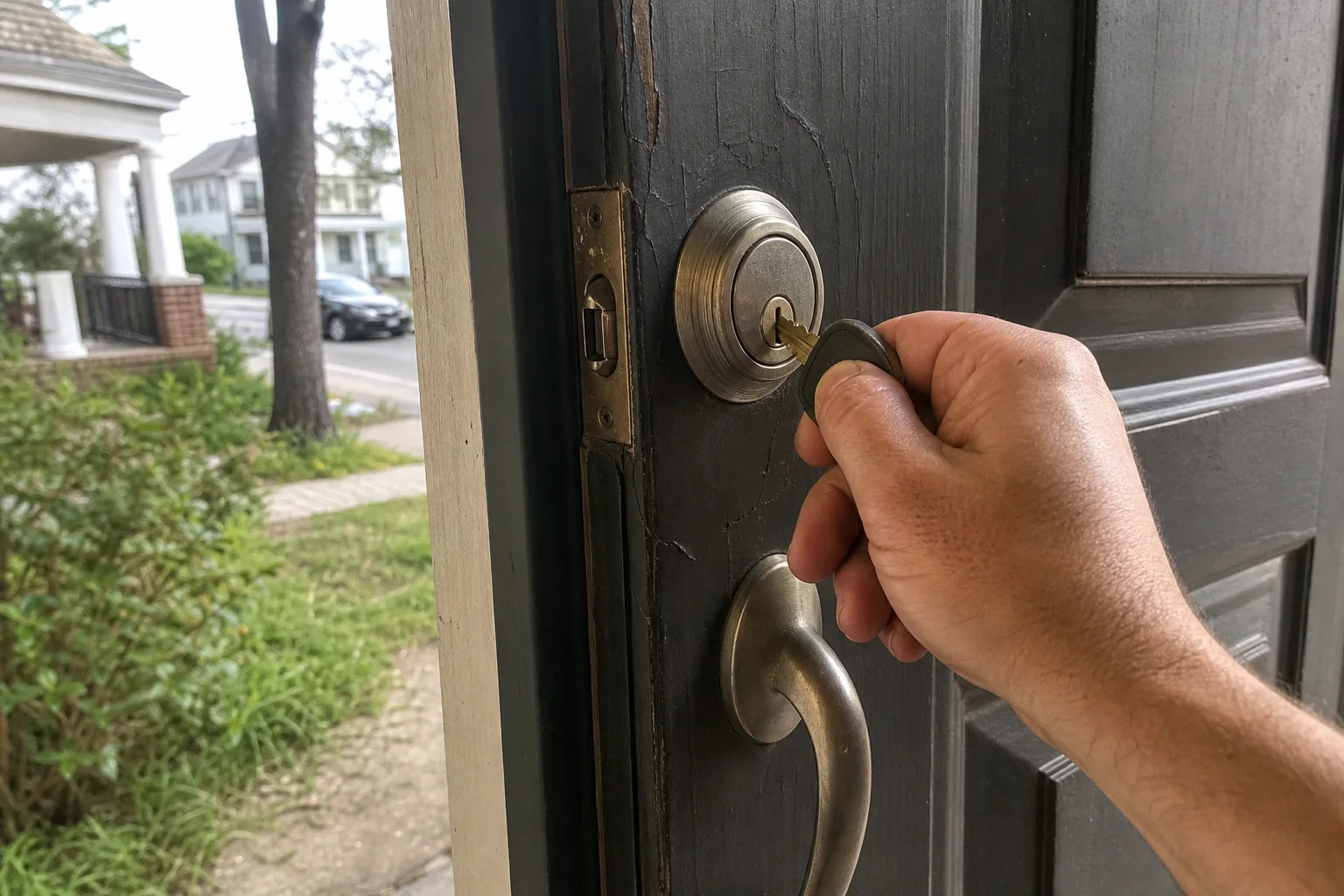
The strike plate is the metal plate on the door frame where the deadbolt enters. With the door open, extend the bolt and look at its position. Then close the door slowly and watch whether it seems to meet the opening cleanly. Scrape marks around the strike, fresh wood dust, or a bolt that needs the door lifted can point to a door-and-frame issue.
Don’t start enlarging holes or moving hardware if you are unsure why the door changed position. A loose hinge, frame movement, or moisture-related swelling may need a closer look. Random adjustments can leave the bolt with less support or hide a larger door problem.
Check the key before blaming the lock
Keys wear down little by little. A key with rounded cuts, a bend, a crack, or heavy buildup may not move the pins inside the lock smoothly. Pins are small parts in the cylinder that line up when the correct key is inserted.
Try a known good duplicate if you have one. Use only a key you know belongs to that lock. If a newer duplicate turns smoothly and the older key does not, set the older key aside. If every working key feels stiff, the lock or door alignment needs more attention.
Also check the key opening with a flashlight. Dirt, lint, paint, or corrosion can keep a key from seating fully. Avoid poking sharp objects into the opening. That can push material farther inside or harm parts you cannot see.
Use care with a sticky lock, but don’t use force
A lock that still works may need cleaning, correct lock lubricant, adjustment, or repair. The right choice depends on where the resistance starts. A key that sticks on entry is different from a bolt that only sticks after the door closes.
Safe checks you can make
- Remove heavy paint or dirt from the outside of the hardware with a soft dry cloth.
- Make sure the key is fully inserted before you turn it.
- Check whether hinges are loose or whether the door sags when opened.
- Test the deadbolt with the door open and closed, using normal hand pressure only.
- Write down when the problem occurs, such as after rain, only at night, or only from one side of the door.
Skip household oils and thick sprays unless the lock manufacturer says to use them. A product that feels helpful at first can collect dirt inside the cylinder. If you use a lock lubricant, follow the product label and use only a small amount. Stop if turning gets harder.
When lock repair makes sense
Repair is worth considering while you can still lock and unlock the door but need more force than normal. Early service may address alignment, loose mounting hardware, a dirty cylinder, or parts that have begun to wear. Waiting until the key will not turn at all can create a lockout at an inconvenient time.
Call for help sooner if you notice any of these warning signs.
- The deadbolt will not fully extend or retract.
- The key must be wiggled each time before it turns.
- The lock catches, grinds, or has loose hardware.
- The key bends or feels close to breaking.
- The door will not lock unless someone holds it in a certain position.
- The lock was damaged after a break-in attempt or shows signs of forced entry.
A locksmith can check the door, strike, key, cylinder, and mounting points together. That matters because replacing a lock will not fix a bolt that rubs a shifted frame. On the other hand, adjustment alone may not solve damaged internal parts.
When replacement may be the better choice
Replacement becomes more likely when the lock has damaged or badly worn parts, when the key cannot be removed or inserted normally, or when the hardware no longer secures the door reliably. Security concerns also change the decision. A lock damaged during an attempted break-in should be inspected before you rely on it.
If you have moved into a home and do not know who has copies of the keys, ask about changing the lock setup. The right option can depend on the hardware already installed and the door’s condition. A professional can explain whether repair, rekeying, or replacement fits that door.
Prepare for a lock repair visit
A few notes can help the technician find the cause without guesswork. Before you call, gather the keys that work and any that do not. Be ready to say whether the lock binds with the door open, only when it is closed, or from only one side. Mention recent rain, painting, door work, or any event that happened shortly before the trouble began.
Keep the area around the door clear. If you rent, check your lease or contact the property manager before changing exterior lock hardware. You may be responsible for reporting a problem, while the owner may control changes to the door or locks.
FAQs
What should I do if my key breaks in the house lock?
Stop turning the remaining piece and avoid using glue, pliers, or another key to pull it out. Those attempts can push the fragment deeper or damage the cylinder. Keep any broken pieces and arrange service so the lock can be assessed after the key is removed.
What details should I share when I call about a stiff lock?
Share the door type, whether it is an exterior or interior door, the type of lock, how long it has been acting up, and whether the key still works from both sides. A photo of the lock and strike plate can also help you describe the hardware clearly when scheduling.
Can I leave a stiff deadbolt unlocked until it is repaired?
That choice can leave the home less secure. If the door cannot lock reliably, use another secure entrance if available and arrange prompt help. If a person is trapped, or there is fire or smoke, call 911 first.
Right Away Locksmith LLC provides residential lock repair in Houston. If your lock is getting harder to turn, call (832) 850-5261 to discuss the problem and arrange the next step.
