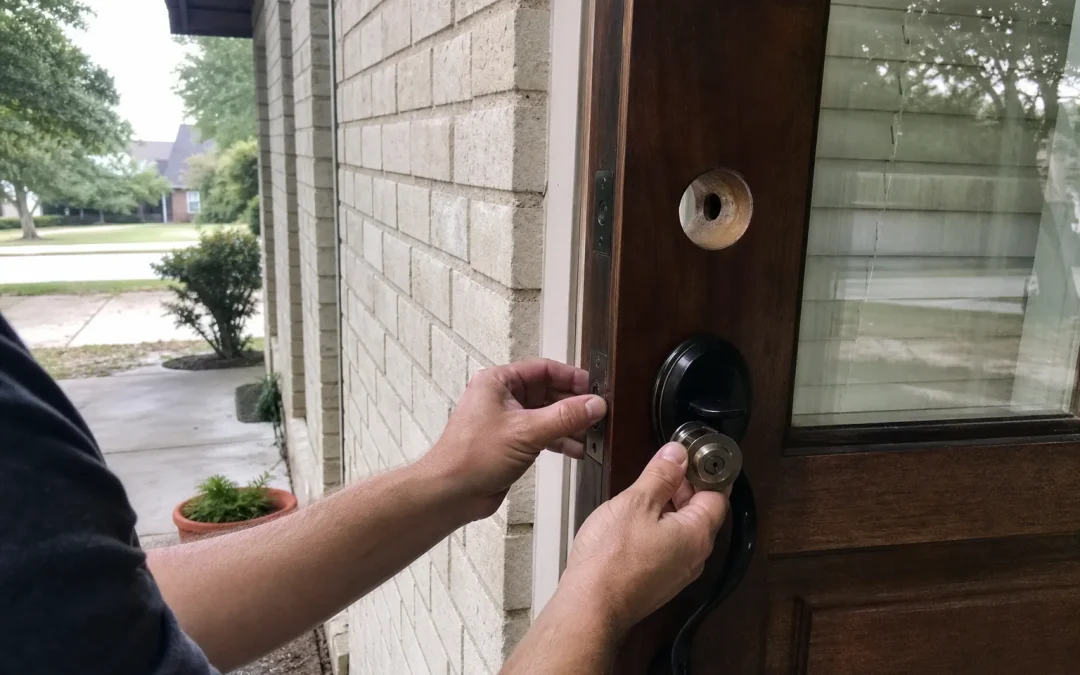
Start deadbolt installation planning at every door that leads from outdoors or an attached garage into your living space. Check the front door, back hinged door, side or service door, and garage-to-house door. Then look at each door’s fit, frame, strike plate, current keying, and how people must get out during an emergency.
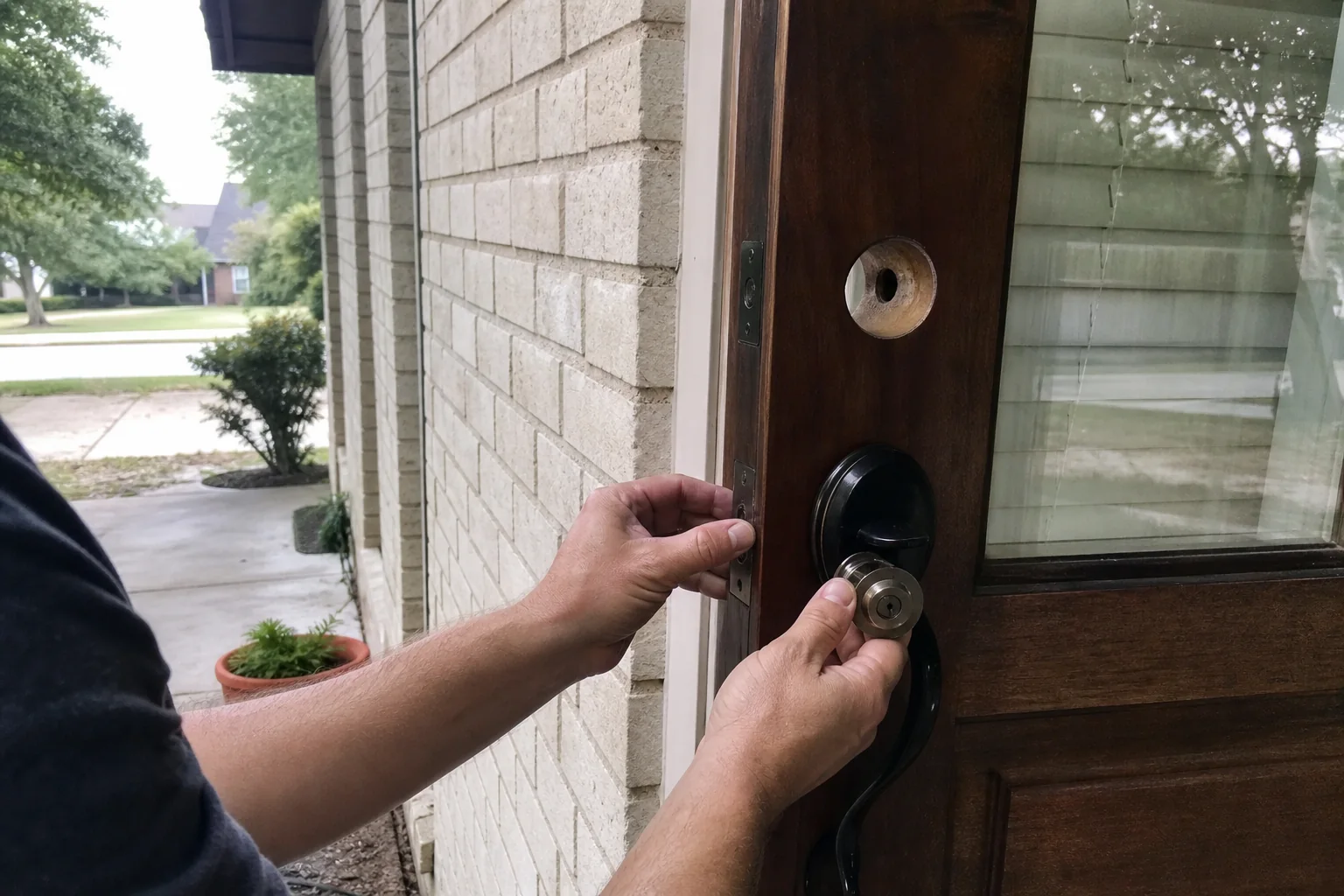
Walk the house by entry route, not by room
A door needs your attention when it creates a path into the living area. Begin outside and follow the routes your household, guests, workers, and deliveries use. This approach can keep an easy-to-miss door from being left out of the plan.
Start with the front door
The front door is often the first place to plan a deadbolt. Check whether it already has one, whether the bolt lines up cleanly with the frame, and whether the key works without sticking. Look at the inside hardware too. Everyone in the home should be able to leave without hunting for a key.
Think about daily use before choosing hardware. A household that comes and goes through the front door may want to keep the same key for more than one entry. A household with frequent visitors may have different access needs. Write down those needs before selecting a lock.
Check the back door and side or service door
Back and side doors often get used for the yard, trash, pets, or groceries. They still deserve the same close look as the front door. Confirm that the door is a hinged exterior door and that it closes fully before considering a new deadbolt.
Pay close attention to a side door that is partly hidden from the street or shared with a utility area. It may be used less often, which can make worn hardware or a loose frame easier to overlook. Put it on the same written list as the main entry.
Include the attached garage door into the house
If you can walk from an attached garage directly into the home, include that hinged door in your plan. The garage door itself and the door into the home are separate items. Check the door into the home for a working lock, a good fit, and a clear exit path.
Keep a detached garage in a separate part of your notes. Its lock needs depend on what it stores and whether it connects to the house. Don’t assume a lock choice that fits the home’s entry door also fits a detached structure.
Know which doors need different hardware
Deadbolts are generally considered for hinged exterior entry doors. A patio slider, French door, storm door, gate, or door with a large glass panel may call for a different plan. Door material, glass placement, frame condition, and the room’s exit route all matter.
Don’t buy hardware based only on how it looks on the shelf. Measure nothing if you’re unsure, and don’t drill a door just to make a new lock fit. A locksmith can inspect the door and frame, then tell you what hardware can be installed safely.
For a hinged exterior door, the Seattle Police Department recommends a deadbolt with at least a 1-inch throw, which is the part of the bolt that extends into the frame. The department also points to a snug door fit and an anchored strike plate and frame. The lock is only part of the setup.
Use a door-by-door checklist before choosing locks
Bring a short set of notes to an installation visit. It saves time and gives you a better basis for deciding which work comes first.
- List every hinged door that leads from outdoors into the home
- Note the door people use most often
- Mark doors with no deadbolt or a deadbolt that sticks
- Check whether the door rubs, drags, rattles, or will not latch
- Look for a loose strike plate, split wood, loose screws, or a damaged frame
- Note whether the door is wood, metal, or fiberglass
- Write down who needs a key or another way to enter
- Decide whether you want existing keys changed after a move, tenant change, or lost key
- Flag any door that is part of a regular escape route
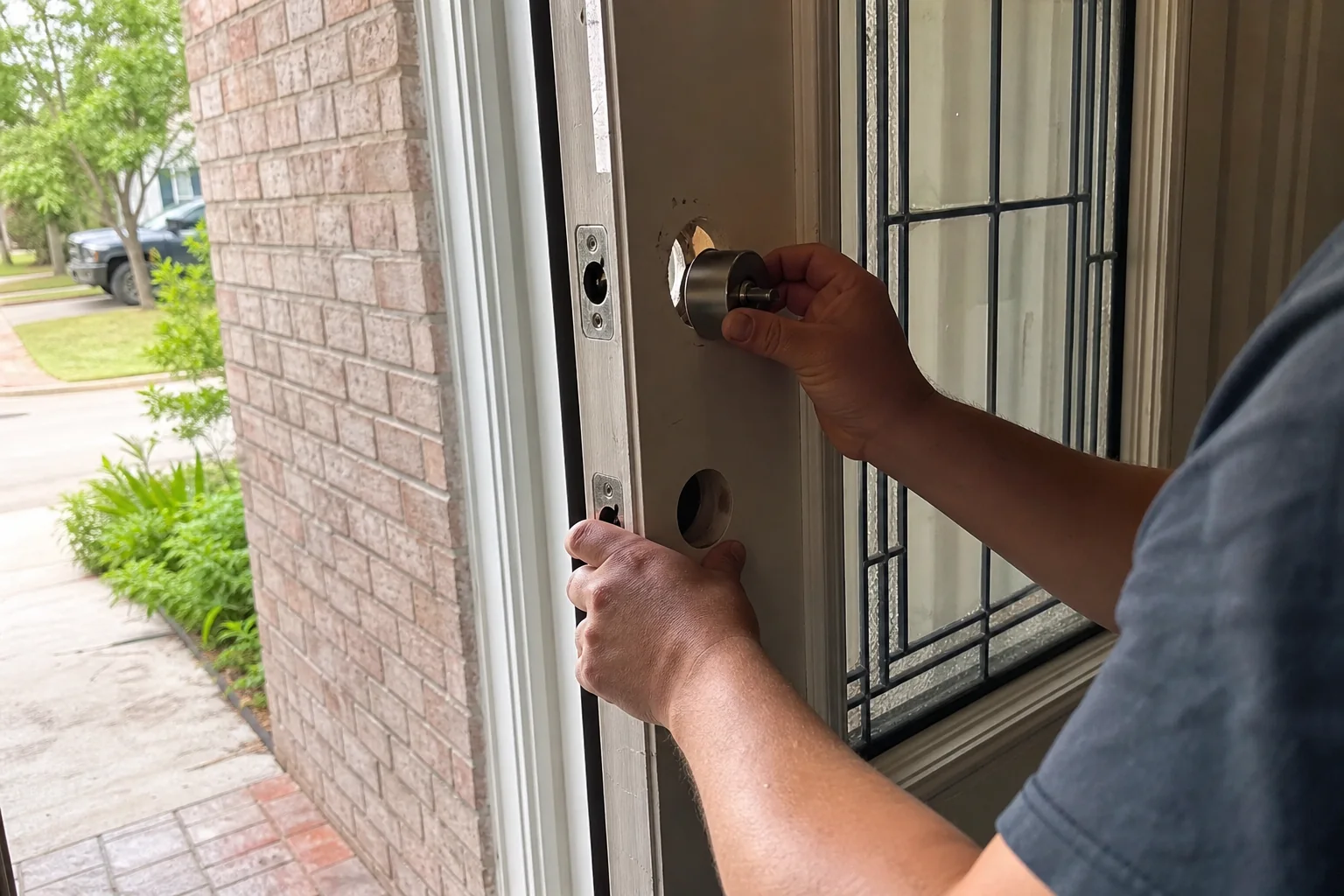
A door that rubs or will not close can affect the lock’s alignment. Deal with that condition before treating a new deadbolt as the only fix. The bolt should enter the opening in the frame when the door is shut, without needing to lift, push, or pull the door into place.
Look beyond the deadbolt itself
The lock body, door, frame, strike plate, and screws work together. A new lock can’t make up for a frame that moves or a door that doesn’t close properly. Ask for the strike area and frame to be checked during deadbolt installation planning.
A standard from the Builders Hardware Manufacturers Association tests residential deadbolts for durability, security, and finish. The group also notes that real-world performance depends on the installation, door and frame construction, upkeep, and environment. Read the lock packaging and ask what its rating applies to, rather than treating a label as a promise for every door.
Consider the condition of the whole entry. A warped door, damaged jamb, broken hinges, or wide gaps around the door may need attention before a lock change. Take clear photos of problem areas if you’re planning work by phone.
Choose access features around the people who use the door
A keyed deadbolt can be a simple choice for many exterior doors. Electronic and smart deadbolts can offer another way to enter, though they add setup, power, and access-management questions. Decide who needs access, how they will enter, and what happens if a battery or device isn’t available.
Ask these questions before selecting a lock.
- Do household members need their own keys or codes
- Will a caregiver, dog walker, cleaner, or guest need temporary access
- Do you want the front and back doors to use the same key
- Who will keep track of spare keys and access codes
- Can every person inside get out quickly during an emergency
Exit safety comes first. UL Solutions says that locks on the exit side generally should not require a key, tool, or special knowledge to open. Its guidance on access and exit locks also notes that electronic locks need to work with life-safety requirements. Local requirements can vary, so ask about the specific door and use of the home.
Set the order for installation work
You don’t have to make every decision at once. Start with doors that lead directly into the living area and have a clear problem, such as no deadbolt, a loose strike area, or a lock that no longer works smoothly. Then plan less-used doors and any key changes.
Group decisions that affect each other. If you want matching hardware, shared keys, or a smart lock at a main entry, mention it before work begins. If the home was recently purchased or keys were lost, say that too. Those details can affect whether you need installation, a lock change, rekeying, or more than one service.
Right Away Locksmith LLC offers residential lock installation in Houston for front doors, back and interior doors, patio or sliding doors, and garage lock needs. Share your door list and photos when you call so the visit can begin with the right questions.
Questions homeowners often ask
Can I install a deadbolt on a door with glass?
It depends on the door design, where the glass sits, and how people leave the home. A locksmith should inspect the door before suggesting hardware. Don’t assume every glass-panel door takes the same type of lock.
Should I replace every lock after moving into a home?
Ask which existing locks can be rekeyed and which need replacement. Rekeying changes which key operates a compatible lock. Replacement may make more sense when hardware is damaged, worn, or does not fit the access plan.
What should I do if a deadbolt is hard to turn?
Don’t force the key or bolt. Check whether the problem happens only when the door is closed. If it does, door or frame alignment may be involved. A locksmith can inspect the lock and strike area without guessing from the symptom alone.
Do I need my landlord’s approval for a new deadbolt?
If you rent, review your lease and ask the property owner or manager before changing lock hardware. They may have rules about keys, approved hardware, or access for maintenance and emergencies.
For help planning locks on your Houston entry doors, call Right Away Locksmith LLC for residential lock installation at (832) 850-5261 and describe the doors, lock concerns, and access needs you want checked.